 Send an email
 Call us
Buying a House in Tuscany: Property Types and Condition Analysis
15 May 2025

Are you in love with Tuscany? Would you like to buy a home but don’t know the basics of the market? There are plenty of great deals here when buying a property to renovate, but be careful! Before diving into this adventure, you need to take all the costs into account… and then ask yourself: are you ready to wait? Plans, permits, incentives, rare materials, design research. All of this is part of restoring a property. But if you’d rather move straight into your Tuscan home, keep reading.

Property Types and Condition Analysis
Tuscany’s housing stock is diverse, ranging from centuries-old farmhouses to modern city apartments. The market performance and pricing differ markedly by property type and condition. Here we analyze categories from ruins and renovation projects to new or turnkey homes, and how each fared in the 2023–25 period.
“Ruderi” (ruins) and Rustic Properties
Tuscany’s countryside is dotted with ruderi – old stone farmhouses or country homes in disrepair – as well as partially restored country houses. These fixer-uppers have traditionally attracted buyers (including foreigners) seeking to create a bespoke Tuscan retreat. However, in the current market these properties face challenges.
Renovation costs have skyrocketed (partly due to the post-Covid construction boom and the Superbonus incentives temporarily inflating labor/material prices). According to agents in Versilia, renovating an old house now costs €1,500–1,800/m², roughly double the €700–800 it used to cost.
This surge in costs means buyers are far more hesitant to take on major projects. Even foreign buyers, who once eagerly bought derelict farmhouses to renovate, “no longer seek out properties to fix up – they too want already-ready homes.”. As a result, homes in need of significant renovation are being heavily discounted on the market.
In summer 2024, Tuscan agents reported that to sell a house requiring major work, the price “has to be revised down by at least 30%” compared to a similar turnkey property . In practice, the price gap between renovated vs. unrenovated can be 30–40%. For example, if a fully renovated country house could fetch €3,000/m², the same house as a ruin might only achieve ~€1,800/m².
This 30-40% discount for unrenovated condition is echoed across many areas of Tuscany, especially where buyers have alternatives. One local newspaper bluntly titled this trend: “30% cut in prices for houses to renovate”. Many such properties linger on the market searching for the right buyer willing to invest time and money.
On the flip side, for adventurous buyers, opportunities abound: there are literally thousands of “case da ristrutturare” (houses to renovate) listings in Tuscany – over 13,000 were on Idealista in early 2025 , some for the price of a small car. For instance, in remote locations, one can find rustic ruins for under €50,000 (though one must budget several times that to make them livable).
Partially Renovated / To-Be-Finished Homes
In between ruins and turnkeys, there are homes that are structurally sound but unfinished (e.g. new builds stopped at rough construction) or older homes where some renovation has begun. These properties are typically priced closer to the lower end of the market range for their location, since buyers must invest to complete them.
Often labeled “al grezzo” (bare-bones structure) or “da ultimare” (to finish), they appeal to buyers like small developers or individuals who want to customize a home and potentially save on purchase price. However, given current construction costs, the savings can be illusory if the initial price is not low enough.
The negotiation margin tends to be highest on this category, as sellers understand buyers will subtract completion costs. Anecdotally, used homes in mediocre condition see about 8–10% average price reductions, a bigger drop than the ~5% on new homes . In 2023–24, many partially renovated properties saw limited demand unless they had exceptional locations.
One supportive factor was the Italian “Bonus Ristrutturazioni” (50% tax credit for renovation works), which remains in effect and can incentivize purchasing a home to renovate (though it’s less generous than the now-ended 110% superbonus).
Certain buyers will still take on these projects if they calculate that even after renovation, their total cost per m² will come out below buying a fully updated home. In Tuscany’s cities, examples include apartments in older buildings that need modernization – these might sell at, say, €2,000/m² in Pisa (unrenovated), whereas a remodeled one in the same area goes for €2,500/m².
In rural areas, a partially restored farmhouse (new roof, structure done, interior empty) might sell for, e.g., €1,200/m² in Siena province, vs €2,000+ if it were completed with modern finishes.
Turnkey and New Construction
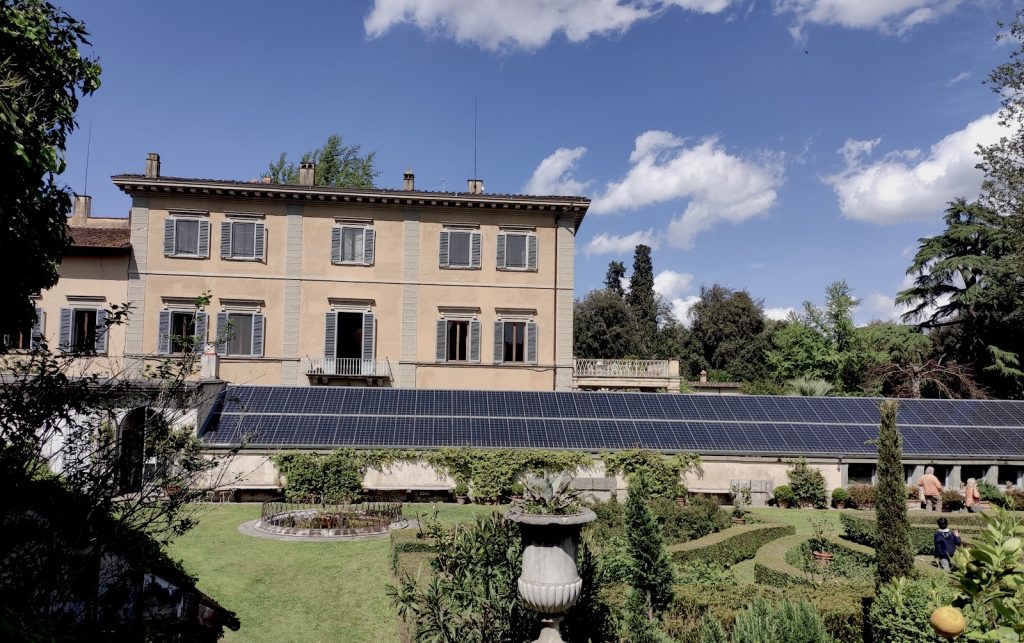
Move-in-ready homes (fully renovated or new-build) have been the stars of the market. Post-pandemic, buyers showed a strong preference for homes that require no additional work, given the hassles and rising costs of construction. “Even foreigners now prefer new or already finished residences… with good energy ratings”, rather than taking on renovations .
As such, turnkey properties command a price premium. In practical terms, that premium is the mirror of the discount mentioned above – roughly 30-40% higher values for refurbished vs fixer-upper, all else equal . For instance, in Versilia an upgraded apartment or villa can sell at top-of-market prices, whereas an outdated one lingers until reduced.
Newly built homes in Tuscany (especially in suburbs of Florence, Pisa, etc., or in new subdivisions in towns) saw price increases around +1.8% in mid-2024 , higher than the overall market.
Apply tuscany property analysis to real investments
Understanding the types and conditions of homes in Tuscany positions you to make informed investment choices. Review curated opportunities that reflect your criteria and market insights.
Buyers are willing to pay more for new amenities, energy efficiency (important with high utility costs), and zero renovation stress. Furthermore, negotiation on new homes is limited – developers often fixed prices. We saw in Florence new builds had only a 5.5% average discount off list , roughly half the usual discount for used homes.
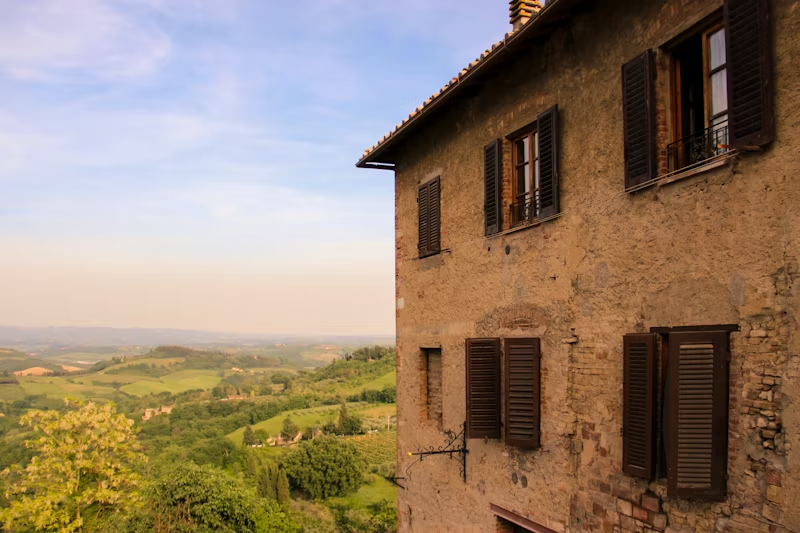
Energy efficiency is a big selling point: many turnkey homes boast solar panels, heat pumps, or at least a high insulation standard, which resonates with buyers’ “higher expectations for efficiency” . In the countryside, “turnkey” often means a traditional farmhouse that has been completely restored (sometimes sold furnished as well).
These attract international buyers and can fetch very high prices if they have attractive features (view, pool, proximity to amenities). For example, a meticulously restored casale in Chianti or near Cortona can easily exceed €1 million if all is in place – these properties saw sustained interest even during the market dip.
In summary, property condition has become a critical price factor: the market clearly rewards move-in-ready homes, while punishing those with big renovation needs. Many buyers in 2023–2025 are time-poor and risk-averse – they’d rather pay more upfront than deal with contractors for a year.
Sellers of properties “with issues” (whether legal, structural, or simply dated interiors) have had to align prices to market reality, often via significant discounts, to get sold. The current trend is that the best properties (new or renovated, in desirable locations) sell faster and closer to asking price, whereas inferior ones may only move after price cuts.
This creates a two-speed market: strong for quality, stagnant for obsolete homes.
Related articles
-
 Investment tips Types of Houses
Current Luxury Estate Market in Italy: A Comprehensive Analysis
19 June 2024
-
 Types of Houses
A Journey Through Iconic Italian Homes: From Ancient Elegance to Modern Innovation
14 May 2025
-
 Types of Houses
Residential Architecture in Tuscany: Styles and Building Types across History
8 July 2025

