 Send an email
 Call us
Mortgages for green homes in Italy: why sustainable properties are winning
15 January 2026
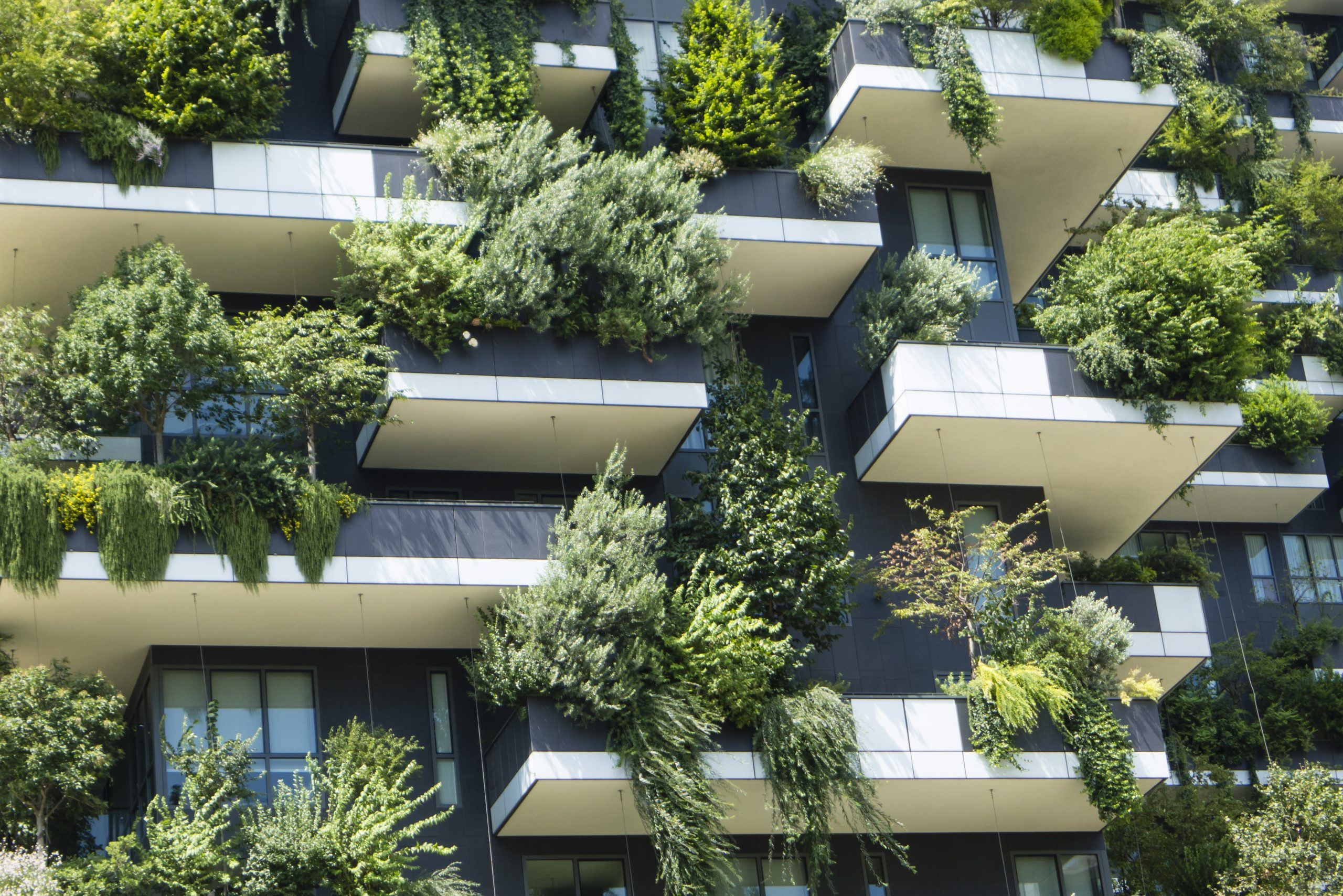
Over the last few years, green homes in Italy have moved from “nice to have” to a real strategic asset for buyers and investors. Energy-efficient properties are not only better for the environment – they are also proving more resilient in value, increasingly attractive on the market, and strongly supported by banks through green mortgages.
For international buyers looking at green homes for sale in Italy, this creates a very clear scenario: sustainable properties are emerging as one of the most interesting ways to combine lifestyle, long-term capital protection, and rental income potential.
In this article, we’ll look at what a green home is in the Italian context, how prices are evolving, why mortgages for green homes are becoming more competitive, and how these properties can work as second homes or investment assets.
What is a green home in Italy?
When we talk about green homes in Italy, we are usually referring to properties with high energy performance – typically in Energy Class A or B according to the national EPC system (Attestato di Prestazione Energetica).
A green home generally offers:
- Excellent insulation and high-performance windows
- Efficient heating and cooling systems (heat pumps, condensing boilers, underfloor systems)
- Often, integration with renewable energy (solar panels, photovoltaic systems)
- Lower energy consumption and operating costs
In other words, green home solutions are not just about labels, but about comfort, lower bills and reduced emissions.
Many of the most beautiful green homes in Italy combine contemporary technology with Italian architecture: renovated historic buildings with upgraded performance, or new builds designed according to modern sustainability standards.
For foreign buyers asking “what is green homes, practically, in Italy?”, the simplest answer is: properties that already meet (or are close to meeting) the performance standards encouraged by the upcoming European “Case Green” directive.

Green homes vs traditional homes: how prices are moving
Recent Italian data show that green homes are holding and growing their value, while inefficient buildings are starting to lose ground.
Between June 2021 and June 2025:
- Properties in Class A–B (green) have increased in value by about +2% on average (price per square metre).
- Properties in Class F–G (brown) have decreased by around –4% over the same period.
- Homes in the intermediate classes (C–E) have remained broadly stable, forming a “grey area” of the market.
In June 2025 specifically:
- Green homes are priced about €500/m² higher than intermediate homes (C–E).
- The gap widens to around €700/m² between green homes and brown homes (F–G).
This confirms a clear trend: energy-efficient properties are more resilient over time, while less efficient ones are starting to face real “discounts” on the market.
A stronger premium in the north and in big cities
The premium becomes even more visible when you look at different regions and city types:
- In Northern Italy, the gap between green and brown homes exceeds €800/m² on average.
- In Central and Southern Italy, it is still significant, up to around €561/m².
In large urban areas the differences are even stronger:
- The gap between green homes and intermediate homes goes beyond €800/m².
- The gap between green and brown homes can exceed €1,100/m².
In smaller towns and provincial capitals, the gap generally ranges between €500 and €750/m², still substantial for any long-term investor.
Milan: a laboratory for the future
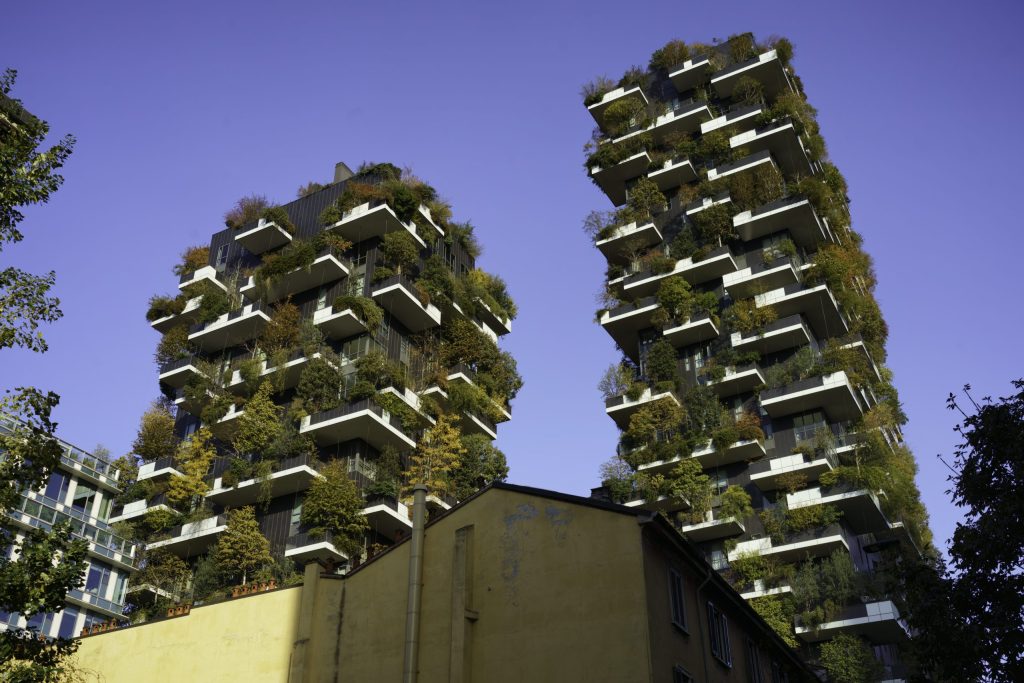
Among Italian cities, Milan stands out as one of the clearest indicators of how the market is evolving. Here, the premium associated with energy-efficient properties is measurable and increasingly significant. The difference in price between green homes (Class A–B) and intermediate classes is around €500 per square metre, which corresponds to approximately 14% in percentage terms. This gap becomes even more striking when comparing green homes with the least efficient properties: the difference rises to about €1,000 per square metre, resulting in what the market now refers to as a –34% “brown discount” for homes in the lowest energy classes.
What makes Milan particularly interesting is the trajectory observed since 2023. During this period, the prices of green homes have continued to grow, while those of inefficient properties have shown a steady decline. This dual trend reinforces a key concept for investors: in Milan, location and energy class are now deeply interconnected. Choosing a green home in such a strong and dynamic market does not simply mean purchasing a more sustainable property; it means securing an asset that benefits from higher demand, greater liquidity, and strong resistance to depreciation.
For foreign buyers evaluating opportunities in Italy, Milan demonstrates how the shift toward energy efficiency is not a temporary trend but a structural evolution — one that increasingly rewards properties aligned with European standards and penalises those that are not.
Green mortgages: how financing follows sustainability
The rise of green home construction and energy-efficient renovation is closely linked to the evolution of mortgage products in Italy.
Banks are increasingly offering green mortgages – loans designed specifically for:
- The purchase of an energy-efficient property
- Or the renovation of an existing home with significant energy improvement
(typically a reduction in consumption of over 30% or a jump of at least two energy classes)
Between 2020 and 2025, the share of green mortgages in Italy has grown rapidly:
- In 2020, green mortgages represented about 3% of new mortgage originations.
- In the first half of 2025, they account for roughly 20.4% of new loans.
In the North-West of Italy, the development has been even stronger, with green mortgages growing by +87%, from 11.2% to 20.9% of new originations.
Overall:
- In the first six months of 2025, 46% of property transactions were supported by mortgages,
- For a total of €22.7 billion in financing, with expectations of around €45.4 billion by year-end (+20% year-on-year).
Green mortgages often offer better conditions than traditional loans – for example, lower interest rates or more favourable terms – which can translate into up to roughly 15% savings on the overall cost of financing compared to mortgages on inefficient properties, depending on the bank and the product.
For a foreign buyer, this means that choosing a green home or planning a structured energy renovation can offer double value: a more resilient asset in terms of price and liquidity and an access to more advantageous financing conditions
Green homes as investment properties and second homes
Italy has always been one of the world’s favourite destinations for second homes. Today, green homes for sale add a new dimension to this appeal, especially for international investors.
A green property can be attractive in several investment scenarios:
Holiday rentals:
Tourists are increasingly sensitive to sustainability. A beautiful green home in a sought-after location (lake, countryside, coast, historic city) can be positioned as a premium eco-friendly stay.
Medium- to long-term rentals:
Professionals, students and expatriates often look for low running-cost apartments with good comfort and modern systems.
Capital preservation:
With the European “Case Green” directive approaching and greater market attention on energy performance, owning a green home means reducing the risk of future value erosion and costly retrofits.
Value-add renovations:
For properties in intermediate classes (C–E), there is often room for energy-focused renovation. Improvements that move the property upwards by two energy classes can significantly increase market value and qualify for green financing.
In all these scenarios, mortgages for green homes are not just a way to buy the property – they become an integral part of the investment strategy, leveraging better lending conditions for more efficient, more desirable assets.
What to look for when buying a green home in Italy
Whether you are considering a newly built property or a renovation project, there are some key elements to consider when evaluating green home solutions in Italy:
Energy Performance Certificate (APE)
Check the current energy class (A, B, etc.). This is the official document that defines whether we are truly dealing with a “green home”.
Construction quality and systems
Look at insulation, windows, heating/cooling systems, ventilation, and any integrated renewables. A green home is efficient not just on paper, but in everyday use.
Location and urban context
As the data show, prime and semi-central locations in major cities and strong markets in the North amplify the price premium of green homes.
Potential for improvement
Even if you buy an intermediate class property, evaluate whether targeted interventions (insulation, systems, windows) could bring it to a green standard and unlock better financing and higher future value.
Rental demand
If the goal is to use the property as an investment, analyse the local rental market: tourism flows, medium-term stays, corporate demand, universities, infrastructure.
How Italian real estate company can help you
For international buyers, navigating green homes construction, regulations, energy classes and mortgages for green homes in a foreign country can be complex.
A specialised partner on the ground can:
- Select beautiful green homes and upgradeable properties in strategic locations
- Coordinate technical and legal checks (including the energy performance documentation)
- Connect you with trusted banking partners for green mortgage solutions
- Assist in evaluating rental potential and investment scenarios
Conclusion: green homes as the new standard for investing in Italy
The Italian market is clearly moving in one direction:
efficient homes are becoming more valuable, inefficient ones more penalised.
Green homes:
- Hold and increase their value better over time
- Benefit from increasingly competitive and widespread green mortgages
- Offer lower operating costs and higher comfort for those who live in them
- Are more attractive to tenants and future buyers
For foreign investors, “Mortgages for Green Homes” is not just a theme – it is a practical strategy: combining sustainable financing, high-quality assets and long-term resilience in one of the most desirable real estate markets in the world.
Related articles
-
 Investment tips Types of Houses
Italy's colorful houses: the towns where you can see them
24 February 2023
-
 Investment tips Observatory
Rental Investment Strategies in Rome: Short-Term vs. Medium-Term Returns
15 July 2026
-
 Investment tips
International house hunters Italy
17 February 2023

