 Send an email
 Call us
Property Types by Location and Features in Tuscany
15 May 2025

Another layer of Tuscany’s market analysis is comparing different property types and features: e.g. city apartments vs. country villas, large vs. small homes, presence of gardens, outbuildings, etc. Buyers’ preferences have shifted in recent years, and certain property characteristics command premiums.
Urban Apartments vs. Suburban Homes
In Tuscany’s cities (Florence, Pisa, etc.), apartments dominate the housing stock. In 2023–24, urban apartments in prime locations held their value well – e.g., downtown Florence or Pisa apartments remained highly sought. However, one trend since the pandemic is increased interest in larger units and peripheral locations offering more space.
For example, in Pistoia and Valdinievole, homes with 4–5 rooms (roughly 3 bedrooms) with a balcony, garage or storage are particularly requested as primary residences. This suggests families are looking for space and amenities, possibly influenced by remote work or lifestyle changes. In contrast, small one-bedroom or studio apartments in city centers, while always rentable, have a narrower owner-occupier market and can be priced at a premium per m² but take longer to sell unless priced right (often bought by investors for rental or short-term rental use).
In the Florence metropolitan area, the desire for space has pushed some buyers to satellite towns where they can afford larger properties (with gardens) for the price of a small city flat. Towns like Scandicci, Sesto Fiorentino, Campi Bisenzio saw stable or rising demand for their relatively spacious homes.
Meanwhile, Florence city’s most requested zones remain the center and well-connected areas, but the overall trend is that limited supply keeps those prices high even as some locals move outward.
Coastal vs. Inland
Tuscany’s coastal markets (Versilia, Pisa/Livorno coast, Maremma) behave differently from inland. Coastal areas attract second-home buyers and retirees, including international buyers, which supports prices. In 2024, sales grew notably in coastal areas like Versilia and Follonica (southern coast), as many Italians with means invested in vacation homes, and some foreigners returned as travel normalized.
Properties with sea views or walking distance to the beach are at a premium. For example, in Livorno province, homes with “spazi aperti e vista caratteristica” (open spaces and a nice view) saw increased requests. A seafront apartment in Viareggio or Castiglione della Pescaia can fetch double the price per m² of a similar inland town’s home. In contrast, inland rural areas (except famed spots like Chianti) have a more local market and often struggle with demographic decline, which keeps prices low.
Size and Layout
Home size has a dual effect: on one hand, larger homes (especially villas or big apartments) offer more comfort, but on the other hand they carry a higher total price, making them less affordable to the average buyer.
During the period of rising interest rates, many buyers downsized their target due to budget constraints. As noted, in some cities the average surface of homes purchased dropped significantly in 2023 (e.g. –15% in Florence), implying people bought smaller homes to meet their budget.
Thus, small and mid-size units (say 50–90 m²) had relatively more liquidity on the market, whereas very large apartments (>120 m²) or luxury villas took longer unless targeting a wealthy segment. However, as conditions improve, those who postponed upgrading space may come back to the market.
Also, multi-room apartments (4-5 vani as Italians count them) are seeing interest for primary residences, provided they have at least some outdoor access (balcony) and storage.
Layout preferences
Modern open-plan living and a room for home office are features that can make a property more attractive. Traditional layouts (many small compartmentalized rooms) might be seen as dated; some buyers factor in the cost of knocking down a wall or two for a more open living area. Two bathrooms instead of one is another plus for larger apartments.
New developments in Tuscany are generally catering to these preferences with contemporary layouts, while older properties may need renovation to match.
Turn property insights into location choice
Understanding Tuscany’s property types and features helps you decide where to buy. Explore the best areas in Tuscany to match your lifestyle and investment objectives.
Gardens and Outdoor Space
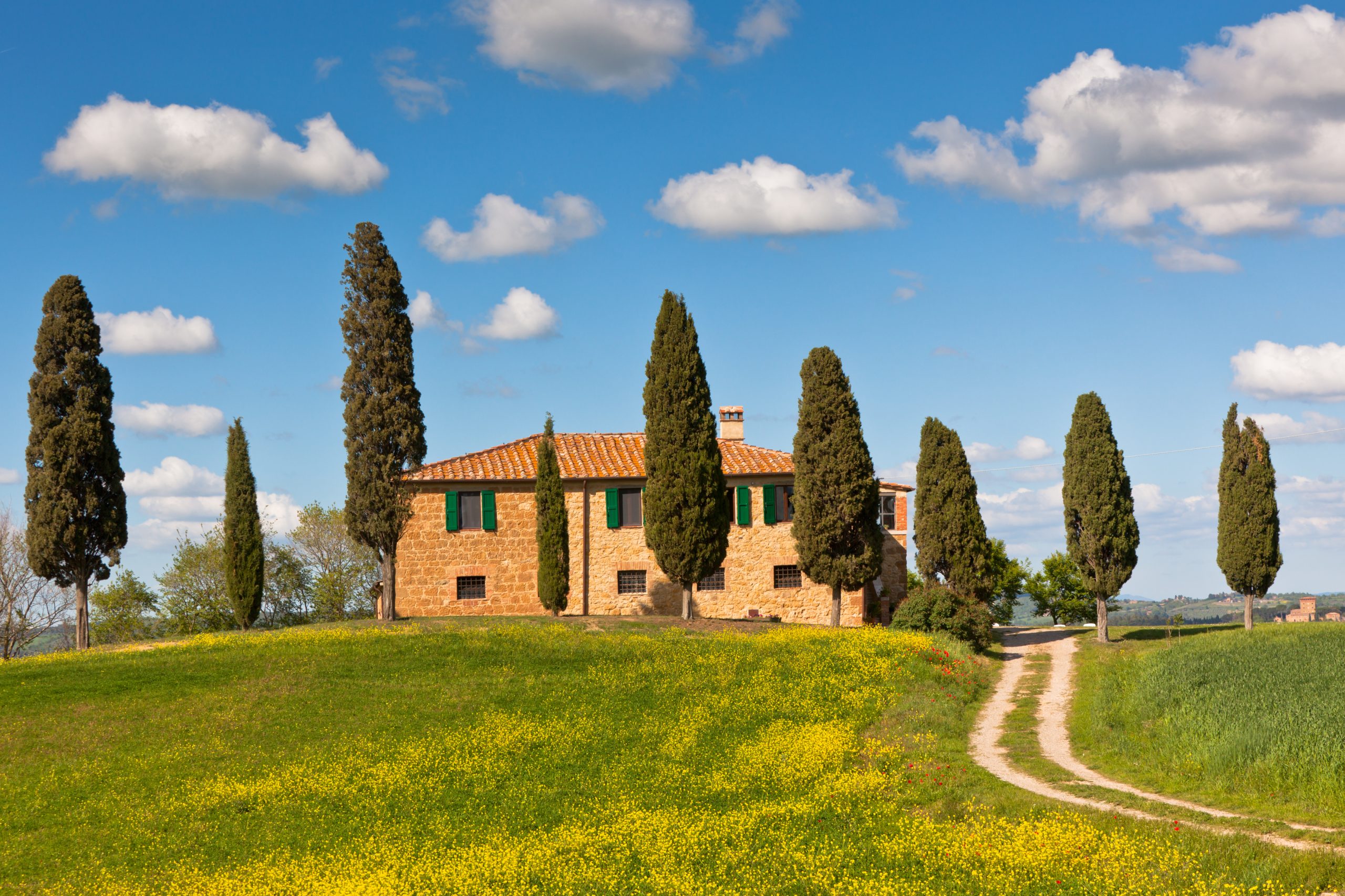
Having a garden, terrace, or even a small balcony has become extremely desirable, especially after pandemic lockdowns. Properties with private outdoor space command a premium across the region. A clear example is in urban markets: an apartment with a terrace or a penthouse with a rooftop view in Florence can sell for much more per m² than a similar one without.
In suburban and rural markets, houses with a garden or some land see stronger demand than those without. FIAIP Toscana’s 2024 observatory noted, “buyers today have higher expectations: they look for ample spaces, energy efficiency and, if possible, outdoor areas.” This statement underlines how crucial a garden or even a spacious balcony has become in the checklist for many buyers.
Thus, a small villa or terraced house with a garden in the outskirts can sometimes be more sought-after (and price-appreciated) than a flat in the city with none. For instance, in the Pisa area, a modest house with a yard in a town like San Giuliano Terme or Cascina might find a buyer faster than a Pisa center apartment, because it offers family-friendly space and still reasonable access to the city.
In coastal second-home markets, gardens, porticos, or any private external space also add significant appeal for vacation use.
Attached Land and Outbuildings
In the countryside, many properties come with extra land (olive groves, vineyards, woodland) or outbuildings (barns, sheds). These features can either add value or not, depending on their utility and the buyer’s profile.
International buyers often love having extra land – the romantic idea of owning a piece of the Tuscan landscape – and might pay a premium for a farmhouse that includes a few hectares, especially if it has olive trees or a small vineyard. Outbuildings can be very attractive if they can be converted into guest cottages, B&B units, or studios.
For example, a farm estate in Chianti with a main villa and a guest annex is highly prized for luxury rentals or multi-generational use. We have seen “prime” country estates in Chianti and southern Siena with multiple buildings trade at thousands of euros per m² due to their estate potential.
However, if land is too extensive or unusable, it might deter some buyers who don’t want maintenance headaches. Similarly, outbuildings in poor condition might just be seen as an extra renovation cost. So the effect on value is case-by-case. In general, properties with manageable, well-kept land (say 1,000–5,000 m² of garden/yard) are easiest to sell, whereas those with vast acreage appeal to a niche.
Prestige Properties
It’s worth noting the segment of luxury “prime” properties in Tuscany, which often combine many of the above desirable features (large size, beautiful location, land, etc.). This includes things like luxury apartments in Florence and grand villas or estates in the countryside.
This segment has its own dynamics: Savills reported that Tuscany’s prime market remained resilient through recent years, with prime prices actually growing ~6% since 2019 on average. In places like Chianti and coastal hotspots, transaction volumes and prices for luxury homes have seen solid growth – e.g. Chianti region’s prime sales volume is up 12% vs 2019, and Versilia’s top prices have risen 17% since 2019.
Ultra-rich buyers, often international (US, Northern Europe), continue to invest in Tuscan real estate for lifestyle and investment. Florence’s prime residential averages €10,000/m², peaking at ~€12,000 in the best district. Coastal and island luxury properties range from about €11,500/m² in Maremma to €16,100/m² in Forte dei Marmi (Versilia).
These properties often feature pools, large gardens, wine cellars, etc., and cater to a different market segment than typical first-home buyers. The presence of this high-end segment especially affects certain micro-markets (e.g. a small village could have multi-million euro estates nearby which don’t reflect the local median but do bring in outside money).
To sum up, property type and features significantly influence market performance in Tuscany:
- Apartments: Strong in cities, especially if well-located and with some outdoor space. Small units are liquid (investors, singles), mid-size with amenities in demand by families.
- Villas/Houses: In suburbs and countryside, very attractive especially with garden/land. Pandemic-era preference shift made these even more popular for those who can afford them.
- Size: Medium-sized homes sell quickest; very large luxury homes require finding the right buyer but hold value. Very small units sell on price but may have limited end-use.
- Outdoor/Garden: Big premium on having it. Many buyers explicitly seek this now.
- Extra land/outbuildings: Can boost value, particularly for foreign and luxury buyers, or for agritourism potential; but require the right buyer profile.
Related articles
-
 Types of Houses
Buying a House in Tuscany: Property Types and Condition Analysis
15 May 2025
-
 Types of Houses
A Journey Through Iconic Italian Homes: From Ancient Elegance to Modern Innovation
14 May 2025
-
 Investment tips Types of Houses
Most Desirable Property Features and Amenities in the Italian Real Estate Market
10 March 2025

