 Send an email
 Call us
Prato, Tuscany: the Best Areas to Buy a Home – a Small Guide for International Buyers
29 January 2026

Buying a home in Tuscany is a dream for many international buyers.
Today, the Tuscan real estate market offers excellent opportunities for those who want to relocate and live permanently in Italy, for investors looking for high-potential properties, and for anyone who simply wants to enjoy part of the year in one of the most fascinating areas of the country.
Among the cities attracting increasing interest is Prato, a strategic destination for those who want to buy a home in Tuscany at more affordable prices compared to the better-known cities, while still enjoying the convenience, services, and authenticity typical of Italian art cities.
In this guide, we will explore the best areas to buy a home in Prato, the advantages of investing in different neighborhoods, and the main types of properties available to suit every need.
Why Invest in Prato?
Strategic Location
Located just few minutes from Florence, Prato offers a dynamic and growing real estate market, making it one of the best cities in Tuscany to buy a home for those seeking a safe and strategic investment. Thanks to more affordable prices compared to Florence and a strong local economy, Prato is an ideal choice for anyone considering investing in property in Italy, whether for residential use or as a rental investment.
Prato is situated in the heart of Tuscany, only 20 minutes from Florence, with fast connections via regional trains and the A11 motorway.
However, the city does not live in the shadow of the regional capital: its central position makes it easy to reach some of the region’s most iconic destinations, including:
- The Tuscan coast (Versilia), only 50 minutes away
- The Apennine mountains (Abetone), just 40 minutes away
- Lucca, Siena, and the Chianti hills
This strategic location makes Prato an ideal choice for those who want to experience authentic “Tuscan living,” staying close to major cultural and tourist hubs while benefiting from a more affordable cost of living.
| Destination or Area | Average Travel Time | Connection or Transport | Notes |
| Prato to Florence city center | 15-20 minutes | train or car via A11 | ideal for daily commuting |
| Tuscan coast Versilia | about 50 minutes | car | quick access to the sea |
| Abetone ski resort | about 40 minutes | car | perfect for winter sports |
| Lucca | about 30 minutes | train or car via A11 | historic city easily reachable |
| Siena | about 50 minutes | car | renowned cultural center |
| Chianti wine country | about 30 minutes | car | famous wine region perfect for day trips |
| Bologna | about 60 minutes | train or car via A11-A1 | economic and cultural hub |
Strong Economy and Investment Potential
Prato is not just a satellite of Florence; it boasts a robust local economy and a history as a center of Italy’s textile and fashion industries. The city’s economy, traditionally based on textiles, is now diversifying with new industries and technologies. There are significant industrial and commercial investments in the area, which means stable employment and a steady demand for housing – an appealing factor if you plan to rent out your property. For instance, Prato has the largest Chinese-Italian community in Europe, actively involved in textile manufacturing; this community’s expansion has increased housing demand in areas around factories (such as Macrolotto and the Via Pistoiese/San Paolo district). Additionally, Prato’s “other” economy (commerce, high-value services, tourism, etc.) has been growing healthily: between 2019 and 2024, employment in tourism and advanced services in Prato rose by over 20%, with tourism-related jobs up 67%. This growth in tourism and services is fostering a rising demand for accommodation, benefiting those investing in rentals or hospitality properties.
Where to Buy a Home in Prato
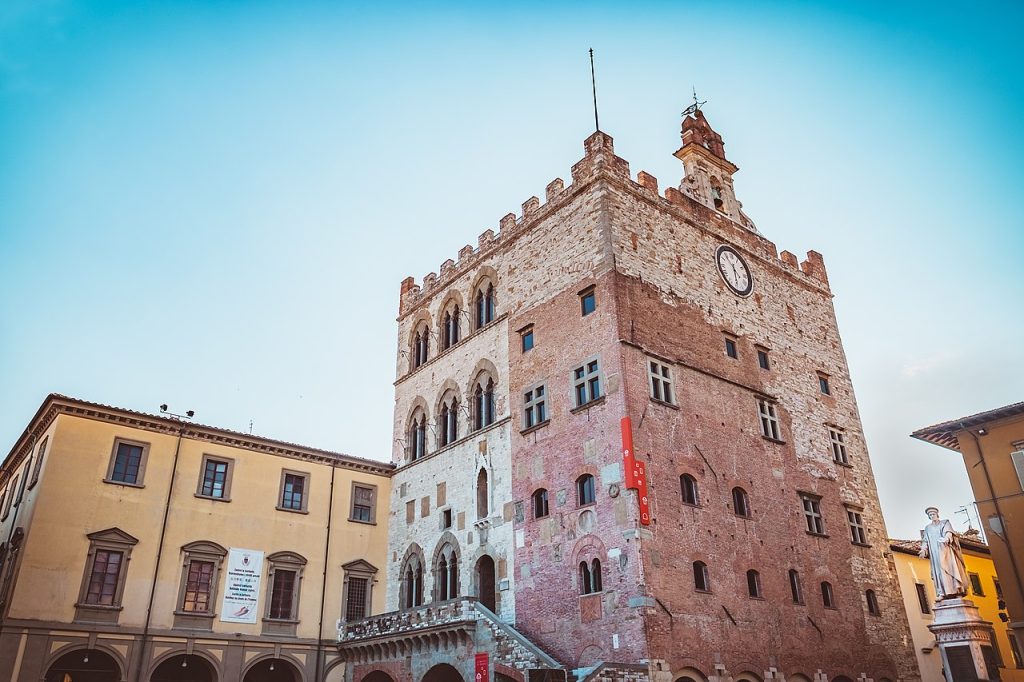
Choosing where to buy a home in Prato is one of the most important steps for anyone looking to invest in property in Tuscany. The city offers a wide variety of neighborhoods, each with its own architectural style, price range, services, and overall quality of life. From the historic streets of the city center to quieter residential areas, and up to the hillside zones with panoramic villas, every part of Prato has unique characteristics that can meet different needs.
Area / Neighborhood | Avg Sale Price (€/m²) | Avg Rent (€/m² per month) |
| Centro Storico (Historic Center) | € 2,530 | € 13.3 |
| Coiano, Santa Lucia, San Martino | € 2,420 | € 10.8 |
| Figline, Villa Fiorita, Galceti | € 2,347 | € 9.9 |
| Le Macine, La Querce | € 2,470 | € 10.1 |
| San Paolo, Galcianese, Pistoiese | € 2,133 | € 13.1 |
| Mezzana, Zarini, Soccorso | € 2,363 | € 13.2 |
| Castellina, Carteano (Hillside areas) | € 2,690 | € 9.2 |
| Pietà, Stazione, Stadio | € 2,315 | € 9.5 |
| Tavola, Le Fontanelle, Paperino, Castelnuovo | € 2,270 | € 13.1 |
| San Giusto, Vergaio, Tobbiana | € 2,393 | € 10,42 |
(Source: Immobiliare.it, Prato market data Nov 2025.)
Where to Buy a Home in Prato
Below is a guide to Prato’s key areas and neighborhoods, divided by their general characteristics. For each zone, we outline the common property types, the strengths of the area, the average price level, and what kind of buyer or lifestyle the area is best suited for.

Centro Storico (Historic Center)
- Ideal for: Investors, professionals, and anyone looking for an authentic Tuscan city experience.
- Properties: Mostly apartments in historic palazzi, many beautifully renovated with modern interiors. You may also find some lofts or studios created within centuries-old buildings.
- Strengths: You are steps away from Prato’s cultural attractions (museums, churches, the famous Emperor’s Castle), as well as cafes, restaurants, boutiques, and lively piazzas. All essential services are at your doorstep, and the train station is within walking distance. The Centro Storico lets you enjoy a classic Italian lifestyle without a car.
- Price Level: Medium-High for Prato. The charm of the old town comes at a premium: average prices are around €2,500–2,600/m² for purchase, and about €13/m² per month for rentals on small apartments. Still, these prices are significantly lower than in Florence’s center, making Prato’s downtown a “value” alternative to Florence for a historic property.
Coiano, Santa Lucia, San Martino
- Ideal for: Families, white-collar professionals, and expats seeking a quiet, high-quality residential area.
- Properties: Primarily residential neighborhoods north of the center with a mix of mid-rise condominiums, modern apartments, and some single-family homes or terraced houses. Properties often have more space (multi-bedroom flats or townhouses) compared to the center.
- Strengths: This area is known for its tranquil, family-friendly environment. There are excellent schools, local parks and green areas, and a full range of shops and services. It’s well connected to the city center while being peacefully removed from the hustle. The quality of life is very high, with organized streets and a community feel.
- Price Level: Medium. Average sale prices are around €2,400/m², with rentals about €10–11/m² per month. It’s a bit above the city’s average, reflecting the strong demand by families. The area’s proximity to the Calvana hills (for example, Santa Lucia is at the foothill) also adds desirability. Overall, Coiano/S. Lucia offers a great balance of comfort and convenience for long-term living.
Figline, Villa Fiorita, Galceti
- Ideal for: Families and nature lovers who want green surroundings.
- Properties: These neighborhoods lie on the northwest edge of Prato, close to the Parco Naturale del Monteferrato (Galceti Park). Housing is a mix of low-rise apartment buildings, semi-detached homes, and the occasional villa. The vibe is more suburban. Homes often have gardens or are near open spaces.
- Strengths: The big draw is the green and relaxed environment. Galceti Park offers hiking trails and nature right next door, making it perfect for those who enjoy outdoor activities. The area is safe and community-oriented, with local markets and recreation facilities. You get tranquility and fresh air without giving up proximity to the city (the center is reachable in 10-15 minutes).
- Price Level: Medium. Homes here average around €2,300–2,350/m² to buy, with rents roughly €9–10/m². This is on par with the city’s average. Essentially, in Figline/Villa Fiorita you can find an affordable family home with a garden, which is harder to come by closer to downtown.
Le Macine, La Querce
- Ideal for: Buyers who want more space and a suburban feel, at a reasonable price – often families or those moving from city apartments to larger homes.
- Properties: Located to the east/southeast of the city, these areas are characterized by newer residential developments. You’ll find modern apartment complexes, duplexes, and quite a few single-family houses or terraced villas with driveways and gardens. Streets are wider and buildings more recent (many built in the 1990s-2000s).
- Strengths: Great value for money – you can get larger floor areas and even independent houses for prices much lower than in central Prato or Florence. The neighborhoods are residential and quiet, with local shops, supermarkets, and green pockets. Parking is plentiful. La Querce, for example, is a small hamlet with a close-knit community and all basic services. These zones also have convenient road access (close to the Prato Est highway exit), making commutes easy.
- Price Level: Medium. The average sale price is around €2,400–2,500 per m², and rents about €10/m². Considering the type of housing available (often multi-bedroom apartments or entire houses), this is an attractive price point. Le Macine/La Querce are known for offering modern comfort at an affordable cost.
San Paolo, Galcianese, Pistoiese
- Ideal for: Real estate investors and landlords, thanks to the high rental demand, as well as budget-conscious buyers who want an accessible entry price.
- Properties: This is a cluster of neighborhoods in the southwest part of Prato, traditionally working-class and close to industrial zones (along Via Pistoiese and Via Galcianese). Properties include many older apartments in small blocks, some recent condo buildings, and typical Tuscan terraced houses (“terratetti”). Units here might be less polished than in north Prato, but many have been refurbished given the rising demand.
- Strengths: The area is highly sought-after for rentals, particularly by workers from Prato’s many textile factories and businesses, as well as by students from a couple of international university campuses in town. Proximity to employment hubs (the Macrolotto industrial district is nearby) means steady demand for housing. Public transport and road connectivity are good, and you can reach the city center or highway quickly. From an investment perspective, this district offers some of the best rental yields in Prato. It has historically been a “popular” (lower-income) area, but is now becoming more popular, partly due to the expanding Chinese community moving beyond the traditional Chinatown on Via Pistoiese.
- Price Level: Low-Medium. It remains one of the more affordable parts of the city: average prices are about €2,100–2,150/m² for sales (the lowest in Prato), while rentals average €13/m² – a remarkably high rent relative to price. This means an investor can buy at a lower cost and rent out at near city-center rental rates, yielding excellent returns. In fact, local realtors often recommend the Via Pistoiese/San Paolo area and the historic center as top picks for investment, noting that prices in north Prato (close to Florence) are also still accessible with good potential.
Mezzana, Zarini, Soccorso
- Ideal for: Families and professionals (especially those working at the nearby hospital or in the eastern part of the city), who value modern conveniences.
- Properties: A largely residential zone in the east/southeast of Prato. It features many mid-century and newer apartment buildings (1950s–1980s and some 2000s), including medium-rise condos and some high-rises. The apartments come in various sizes from small two-room units to larger family flats. A few single-family homes exist but are rarer.
- Strengths: Convenience is a hallmark of this area. You’ll find everything from supermarkets, shopping centers and gyms to schools and playgrounds. The new public hospital of Prato (Ospedale Santo Stefano) is not far, which increases housing demand for healthcare workers and medical students. Mezzana and Zarini are also close to the Prato Est highway exit and the “Parco Prato” shopping mall, so connectivity and amenities are excellent. The neighborhood is reasonably quiet at night but has plenty of daily activity with local cafes and stores – a balanced city life.
- Price Level: Medium. Homes here cost around €2,300–2,350/m² on average, aligning with the city mean, and rentals are relatively high at €13+/m². This indicates strong rental interest (possibly from young families or hospital staff). Mezzana/Zarini provide the comfort of a modern urban district, and the steady growth in infrastructure keeps property values on an upward trajectory.
Castellina, Carteano (Hillside Areas)
- Ideal for: Those seeking a prestigious property or a Tuscan second home with scenic views – often international buyers, retirees, or well-to-do families.
- Properties: These are hillside neighborhoods on the north side of Prato. Castellina and nearby Carteano are among the most upscale residential areas in the city. Expect to find villas with panoramic views, independent houses, and traditional Tuscan country homes (casali) that have been converted into luxury residences. Some exclusive small apartment complexes or gated communities also exist, but there are no high-rises here.
- Strengths: The appeal lies in the privacy, greenery, and breathtaking views over the city and valley. Living here offers a quiet, peaceful environment with a countryside feel, while still being just a few kilometers from the city center. The neighborhoods are characterized by tree-lined streets, large gardens, and a low population density. It’s perfect for those who want an oasis of tranquility and high living standards. These areas also tend to have a strong long-term value – properties here are considered blue-chip real estate in Prato.
- Price Level: Premium. This is the most expensive bracket in Prato, with average asking prices around €2,700/m², and high-end properties often far above that. (To illustrate, new-built luxury homes in Castellina can reach €3,300–€3,800/m².) Paradoxically, rents are on the lower side – about €9–10/m² – because many properties are owner-occupied or used as second homes rather than rentals. In short, Castellina/Carteano is ideal if you prioritize quality of life and long-term value over immediate rental yield. The investment here is in a prestigious lifestyle and a property that will hold its value over time.
Pietà, Stazione, Stadio
- Ideal for: Families, daily commuters, and young professionals who want convenience and urban amenities without living in the crowded center.
- Properties: This broad area spans from just outside the historic center (Pietà is directly adjacent to downtown) toward the main railway station and civic stadium. Housing includes a mix of early-20th-century and 1960s–70s apartment buildings, some modern condos, and a few residential streets with townhouses or villas (especially in La Pietà, which is a distinguished neighborhood). Apartment sizes vary widely – you can find anything from a small two-bedroom to spacious old-style flats.
- Strengths: Excellent connectivity defines this area. The Prato Centrale train station is here, making it perfect for those commuting to Florence or other cities for work (Firenze SMN is a 20-minute train ride). The neighborhood also hosts schools, a large hospital (the older Santo Stefano hospital, now partly used for other medical services), and sports facilities like the Lungobisenzio stadium and tennis clubs. La Pietà in particular is known for its leafy streets and a prestigious reputation, plus it borders the lovely Prato Cascine park along the Bisenzio River. Living here means you can easily walk or bike to the center, catch a train, and have all services close by.
- Price Level: Medium. Average prices sit around €2,300/m² for purchase and €9.5/m² for rent. Being so convenient, La Pietà and surrounding streets are highly sought after; new or renovated properties here can be above the city average (often €2,500–€2,800/m² for older refurbished apartments ). Still, compared to central Florence or other cities, these remain reasonable. For many buyers, Pietà/Stazione offers a sweet spot of affordability, comfort, and connectivity.
Tavola, Le Fontanelle, Paperino, Castelnuovo
- Ideal for: Those seeking more tranquility and space – e.g. families with children, or anyone wanting a semi-rural atmosphere – as well as budget-conscious buyers looking for larger homes at lower prices.
- Properties: These are villages and suburban districts on the southern and eastern outskirts of Prato. The housing stock includes many terra-tetto homes (the classic two- or three-story attached houses typical of Tuscan towns), small apartment buildings, and newly built family houses. It’s common to find properties with a bit of yard or garden. Tavola and Castelnuovo are more like small towns surrounded by fields, while Le Fontanelle and Paperino are closer to the industrial areas (with some warehouses around) but still primarily residential.
- Strengths: The key advantage is the green, quiet environment. You can enjoy a more laid-back, village-like lifestyle. There’s less traffic and plenty of open space for kids to play or for gardening. Each of these localities has basic amenities (grocery stores, pharmacies, cafes) and is within a 10-15 minute drive to the city. Parking and driving are easy, a contrast to the crowded city center streets. These zones are also seeing some modern housing developments, offering contemporary homes at entry-level prices.
- Price Level: Low-Medium. These are among the more affordable areas in Prato. The average sale price is around €2,200–2,300/m², slightly below the city average. For instance, Tavola and nearby villages still have houses that offer great value for their size. Interestingly, rents can be relatively high (averaging €13/m² ) since there’s steady local demand from workers (the Macrolotto industrial area is not far) and from families who cannot afford to buy in these zones. However, compared to central locations, you generally get more house for your money here. These neighborhoods are ideal if you prioritize space, peace, and a tight-knit community over proximity to nightlife or the office.
San Giusto, Vergaio, Tobbiana
- Ideal for: Families and individuals working in the western part of Prato or neighboring towns, and those who want a convenient, well-connected area that isn’t too densely urban.
- Properties: This is a belt of semi-peripheral zones on the west side of the city. You’ll find many typical semi-rural Tuscan homes (row houses and duplexes) as well as small apartment buildings. Some newer condo complexes have arisen in the last decade, but much of the area retains a traditional feel. Vergaio and Tobbiana are more village-like (technically hamlets of Prato with their own little centers), whereas San Giusto is more directly attached to the city.
- Strengths: These quarters have a good supply of local services (shops, cafes, parish churches, etc.) and benefit from excellent road connectivity – the Prato Ovest highway exit is nearby, and the main roads link to the industrial zones and to cities like Pistoia. They are convenient for people employed in Prato’s western industrial district or the suburb of Montemurlo (which has many factories). The presence of artisan workshops and businesses in the vicinity means the area is economically active. At the same time, living here offers a calmer environment than the inner city. There’s a blend of suburban comfort and small-town Tuscany charm.
- Price Level: Medium. The average sale price is about €2,350–2,400/m², which is around the city average. Rental rates are roughly €9–10/m², indicating that many properties are owner-occupied. Overall, San Giusto/Vergaio represent solid middle-tier markets: not the cheapest, but still affordable relative to downtown, and likely to hold value due to their connectivity and ongoing local economic activity. These zones are a good choice if you want a practical home base with less congestion, while still being within a short drive of Prato’s center.
Living in Prato: Final Overview of the Best Areas to Live or Invest
Prato offers a wide range of neighborhoods, each with different property types, services, price levels, and growth potential. For this reason, IRECOM guides every client through a personalized analysis, based on real data and in-depth knowledge of the local market.
For buyers looking for investment opportunities, the areas with high rental demand and accessible entry prices offer the strongest yields. Neighborhoods such as San Paolo, Galcianese, and Pistoiese attract a large workforce thanks to their proximity to business and industrial hubs, ensuring stable rental demand and strong returns. Mezzana, Zarini, and Soccorso are also highly attractive, especially due to the hospital and numerous services that generate constant rental interest. The Historic Center, although more expensive, remains a solid option for those seeking prestigious properties and an international clientele.
Those looking to buy a home to live in will find excellent opportunities in the quieter, well-serviced residential districts. Coiano, Santa Lucia, and San Martino are perfect for families and professionals seeking high-quality living, good schools, and well-kept environments. Figline, Villa Fiorita, and Galceti offer a green, tranquil lifestyle close to nature. For buyers seeking space and comfort, Le Macine and La Querce provide a great balance between convenience and price. For those wanting peaceful neighborhoods with affordable prices and independent property types, Tavola, Le Fontanelle, Paperino, and Castelnuovo are ideal. Meanwhile, Pietà, Stazione, and Stadio suit anyone prioritizing connectivity and daily convenience.
Finally, Prato also includes exclusive hillside areas, perfect for premium residences or a second home in Tuscany. These neighborhoods offer panoramic villas, privacy, quiet surroundings, and high long-term property value, ideal for buyers wanting to live immersed in nature without giving up proximity to the city.

Related articles
-
 News
NewsProperty Law in Italy: the Essential you Need to Know
18 November 2025
-
 News Observatory
IMU Property Tax: The Complete Guide for Foreign Buyers
18 June 2026
-
 Investment tips News
Mortgages for green homes in Italy: why sustainable properties are winning
15 January 2026


