 Send an email
 Call us
Real estate investment in Rome Italy: strategies, returns and risk analysis
29 May 2026
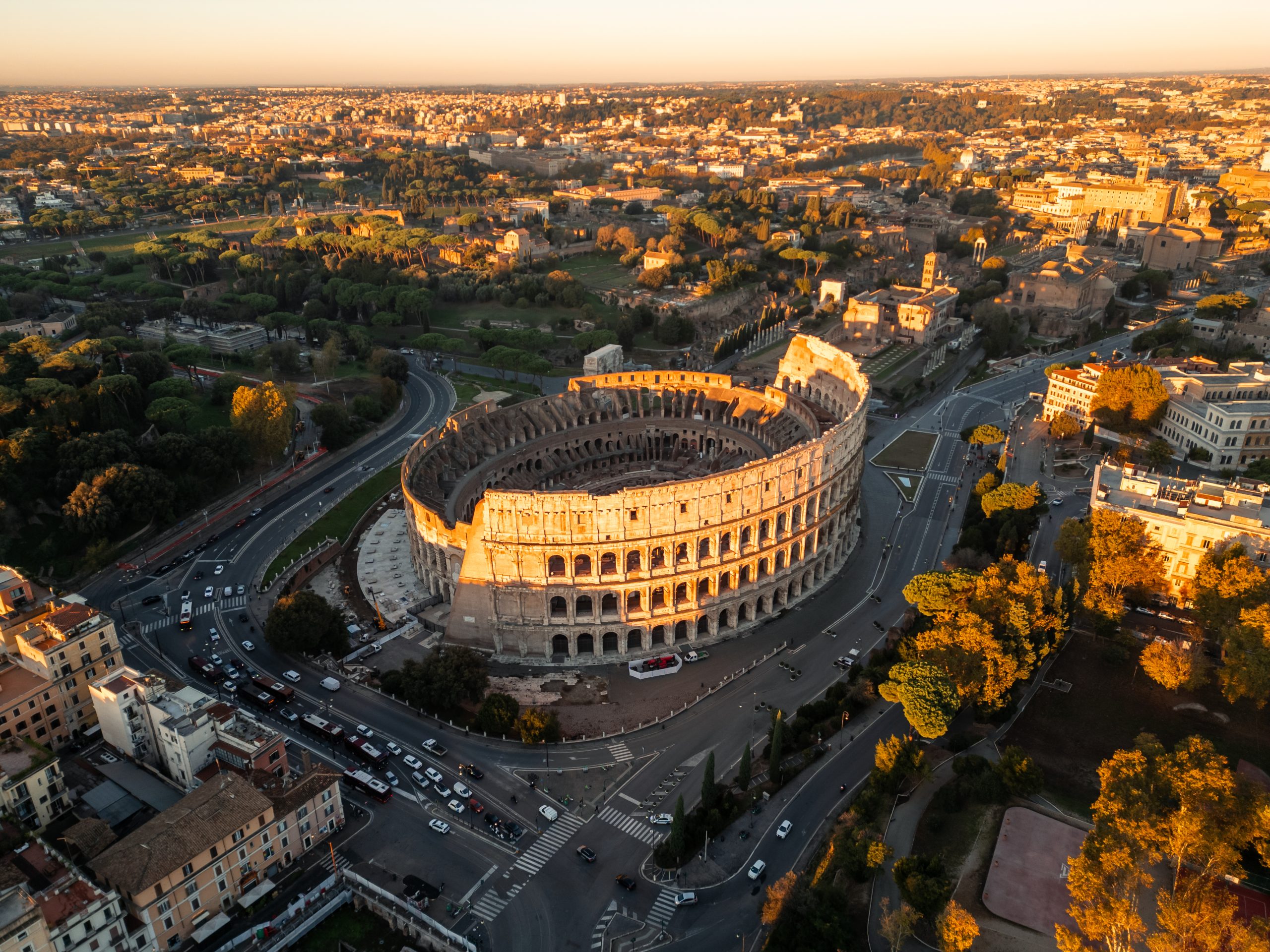
Rome is one of the most complex real estate markets in Italy, and this is precisely why it can be interesting for investors. It is not a city where a single strategy applies everywhere. The historic centre, residential prime districts, student areas, emerging neighbourhoods and value-add opportunities all behave differently, with different return profiles, entry prices, liquidity and risks.
For international buyers evaluating real estate investment in Rome Italy, the first question should not be whether Rome is attractive in general. The more useful question is: what kind of return are you trying to achieve, and which part of the city is structurally aligned with that objective?
Rome offers three main investment logics: capital preservation, income generation and capital growth. Each requires a different location, property type and risk tolerance.
Is Rome real estate a good investment?
The answer is yes, but only if the investment strategy is clear from the beginning. Rome is not as immediately liquid or as corporate-driven as Milan, but it offers a different type of opportunity: lower average entry prices compared to Milan, strong international visibility, structural tourism demand, a large university population, institutional employment, and a gradual recovery in prices across several districts. One recent investor comparison describes Rome as a market with more accessible entry prices and higher medium-term upside potential, while Milan remains more mature and stability-oriented.
This distinction is important. Rome is not necessarily the best market for investors seeking maximum simplicity. Transactions can be slower, technical checks are more important, and property quality varies significantly. However, for investors who can manage complexity, Rome offers a wide range of strategies that are difficult to replicate in smaller Italian cities.
The broader Italian real estate context is also supportive. Cushman & Wakefield reported that 2025 was a turning point for Italian real estate investment volumes, with total volumes reaching €12.5 billion, up 23% year-on-year, and foreign capital representing 58% of total volumes. For 2026, the expected trend is consolidation, with capital returning gradually toward prime, well-located assets and investors becoming more selective, particularly around ESG-compliant properties and lower-risk profiles.
In Rome, this translates into a market where well-located, high-quality assets remain attractive, while weaker properties require a more cautious and analytical approach.
The three investment strategies in Rome
The most effective way to approach investing in Rome real estate is to separate the market into three strategic categories.
| Strategy | Main objective | Typical areas | Return profile | Risk level |
|---|---|---|---|---|
| Capital preservation | Protect value over time | Centro Storico, Aventino, Parioli, Prati | Lower yield, stronger resilience | Lower to medium |
| Income generation | Produce recurring rental income | Trastevere, Testaccio, Bologna, Garbatella-Ostiense, Pigneto | Higher gross yield, more operational exposure | Medium |
| Capital growth / value-add | Buy below potential and improve asset value | Ostiense, Pietralata, selected semi-central areas, renovation assets | Higher upside, execution-dependent | Medium to high |
This distinction matters because investors often confuse a good property with a good investment. A prestigious apartment in the Centro Storico may preserve capital extremely well, but it may not generate the highest yield. A smaller unit in Pigneto may produce stronger rental income, but it will not carry the same long-term defensive profile as a prime asset near the historic centre. A renovation project may deliver appreciation, but only if technical, planning and construction risks are controlled.
Capital preservation: prime areas and trophy assets
Capital preservation is the most conservative investment strategy in Rome. It is designed for buyers who prioritise long-term value retention, scarcity and international appeal over maximum yield.
The main areas for this strategy are Centro Storico, Aventino, Parioli, Prati and selected parts of Trastevere. These districts benefit from structural scarcity, strong identity and sustained demand from both domestic and international buyers. In Rome’s prime segment, prices are not driven only by square metre averages, but by rarity, building quality, views, outdoor space, floor level, architectural value and location within the district.
This is particularly relevant in the luxury segment. IRECOM’s previous Rome market analysis notes that luxury properties in Rome are concentrated in a limited number of districts, especially Centro Storico, Parioli, Aventino, Prati and selected areas of Trastevere, where value is driven by scarcity, architectural quality and positioning rather than price per square metre alone.
For international buyers, this type of investment makes sense when the objective is to hold a high-quality asset over the long term. The expected return is often a combination of lifestyle value, capital stability and gradual appreciation, rather than aggressive rental yield. It is the Rome equivalent of buying a durable asset in a globally recognised city.
The main risk is overpaying for average-quality properties simply because they are located in prestigious districts. In prime Rome, asset selection is everything. A poorly laid-out apartment, a building with technical issues, limited light or no lift may underperform even in an excellent location.

Income generation: rental yield and operational return
If the objective is income generation, the analysis changes. The investor must focus not only on purchase price, but on demand depth, rental regulation, property size, tenant profile, management costs and net yield after taxes and operating expenses.
Rome has strong rental demand, but the best income strategy depends on the type of rental model. Short-term rentals are concentrated in central and highly visited districts, while medium-term and long-term rentals are often stronger in areas connected to universities, hospitals, business districts and transport infrastructure.
Recent yield data suggests that the average gross rental yield across Rome is around 4.9%, with average net rental yield around 3.5%. The same dataset identifies Pigneto studio apartments among the strongest gross-yield segments, while Centro Storico two-bedroom properties sit among the lowest-yield categories, reflecting the classic trade-off between prestige and income efficiency.
This is where the question what is a good rental yield becomes important. In Rome, a good yield is not simply the highest number. A 6% gross yield in a weaker area may be less attractive than a 4% yield in a highly liquid district if vacancy, management complexity, tenant risk or resale liquidity are materially different. For international investors, net yield and operational simplicity matter more than headline yield.
Districts such as Bologna, Garbatella-Ostiense, Pigneto and selected areas around university and professional hubs can be relevant for investors seeking stronger income potential. Central districts such as Trastevere and Testaccio may offer a different profile, combining rental demand with stronger lifestyle appeal and resale liquidity. However, short-term rental strategies require careful attention to regulation, condominium rules and operating costs.
Capital growth and value-add strategies
The third strategy is capital growth, often through value-add opportunities. This usually means buying a property where value can be created through renovation, repositioning, energy improvement, layout optimisation or identifying an area before it fully reprices.
Rome is particularly suitable for selective value-add investing because its housing stock is older and uneven in quality. Many apartments are in good locations but require technical upgrades, energy improvements or functional redesign. For investors with the right team, this can create value. For investors without technical control, it can create risk.
Areas such as Ostiense, Pietralata, selected parts of Pigneto, San Lorenzo, and other semi-central districts may offer growth potential, especially where infrastructure, regeneration or changing buyer preferences are improving demand. The Rome market has been gradually expanding beyond the most obvious prime districts, and investors who understand micro-locations can sometimes access better entry prices before full market recognition.
The key issue is execution. A value-add strategy in Rome must account for permits, condominium constraints, construction timelines, technical compliance, cadastral consistency, contractor reliability and realistic resale value. The upside can be attractive, but it is not automatic. In many cases, the profit is made not at resale, but at acquisition: by buying the right asset at the right discount with a realistic budget for works.
Compare Rome’s investment districts
Investment performance in Rome depends heavily on location, pricing dynamics and long-term demand. Review how different districts align with your strategy and risk profile.

Rome investment areas by strategy
The most useful way to evaluate Rome Italy property investment is by matching the area to the expected return profile.
| Area / district | Best suited for | Investment logic |
|---|---|---|
| Centro Storico | Capital preservation | Scarcity, international demand, trophy assets |
| Aventino | Capital preservation | Privacy, low supply, high-end residential stability |
| Parioli | Long-term hold | Larger properties, residential prestige, family demand |
| Prati | Balanced investment | Centrality, services, liquidity, structured demand |
| Trastevere / Testaccio | Lifestyle + income | Strong demand, character properties, resale appeal |
| Bologna / Policlinico | Income + growth | Student and professional demand, accessibility |
| Garbatella / Ostiense | Income + regeneration | Connectivity, younger tenant base, evolving profile |
| Pigneto | Yield-focused investment | Lower entry price, stronger gross yield potential |
| Monteverde | Value + livability | Larger units, better price-to-quality ratio |
| Pietralata | Value-add / emerging | Infrastructure and regeneration potential |
This table should not be read as a ranking. It is a framework. The best investment depends on the objective. A buyer seeking capital preservation should not judge Centro Storico by the same metrics used for Pigneto. Likewise, an investor focused on yield should not expect Parioli to behave like an emerging rental district.
Return analysis: yield versus appreciation
In Rome, returns are usually built through a combination of rental yield and capital appreciation. The balance between the two depends on the area.
Prime districts tend to offer lower yields but stronger defensive characteristics. This is common in mature global markets: the more secure and scarce the asset, the lower the income return tends to be. Investors accept this trade-off because liquidity, prestige and long-term capital preservation are stronger.
Growth districts and income-oriented areas often offer better yields, but require more operational attention. Tenant profile, management model, vacancy risk, maintenance, taxation and regulation all become more important.
From a practical perspective, investors should model at least three numbers before making an offer: gross yield, net yield and expected capital appreciation. Gross yield is useful for comparison, but it can be misleading. Net yield, after taxes, condominium charges, property management, maintenance, vacancy, insurance and compliance costs, is the figure that determines real performance.
Risk analysis: what investors should watch carefully
Rome rewards investors who understand complexity, but it can penalise those who underestimate it. The main risks are not only market risks. They are often technical, legal and operational.
The first risk is buying a property with poor documentation. Cadastral inconsistencies, unapproved renovations, unclear permits or condominium issues can delay the transaction and reduce future liquidity. This matters especially for older apartments and renovation assets.
The second risk is overestimating rental income. Headline rental yields can look attractive, but net profitability depends on taxation, vacancy, management costs, maintenance, utilities, cleaning, furnishing, platform fees if relevant, and regulatory compliance.
The third risk is buying in an area based on general narratives rather than micro-location. Rome changes street by street. Two properties in the same district can behave very differently depending on transport access, building quality, noise, light, floor level and surrounding demand.
The fourth risk is underestimating energy and renovation costs. Italy’s real estate market is becoming increasingly selective around efficient and high-quality buildings. Cushman & Wakefield’s 2026 outlook highlights growing investor selectivity, especially around ESG-compliant assets and lower-risk profiles, which reinforces the importance of energy performance and property quality in future liquidity.
Short-term rentals: opportunity, but not a shortcut
Short-term rentals can be profitable in Rome, but they should not be treated as a simple or automatic strategy. Tourism demand is structurally strong, and central areas such as Centro Storico, Trastevere and parts of Monti remain attractive. However, competition, regulation, condominium limits and operational costs must be factored into the analysis.
For investors based abroad, short-term rental strategies require reliable local management. The difference between gross revenue and net return can be significant once cleaning, maintenance, property management, taxes, platform fees, utilities, furnishing and vacancy are included.
This is why short-term rental should be evaluated as a hospitality-style operation, not as passive income. It can work well, but only when the property, location, management structure and regulatory framework are aligned.
Long-term and medium-term rental strategies
Long-term and medium-term rentals are generally more stable and less operationally intense. They may produce lower gross income than short-term rentals, but they often offer greater predictability.
In Rome, this approach can work well in areas with demand from students, professionals, medical staff, diplomatic workers and international residents. Bologna, Policlinico, Ostiense, Prati, parts of Monteverde and well-connected semi-central districts can all support this type of strategy.
For international investors, medium-term rentals can sometimes offer a useful balance: stronger income than traditional long-term leases, but less operational pressure than nightly short-term rentals. However, tax treatment, contract structure and tenant profile must be reviewed before relying on this model.
When value-add makes sense
Value-add investing in Rome can be attractive when the purchase price reflects the actual condition of the asset and the renovation budget is realistic. It is not enough for a property to be “to renovate”. The investor must understand whether the renovation will create marketable value.
A good value-add opportunity usually has several features: a solid location, a discount justified by condition rather than structural weakness, a layout that can be improved, no major legal or urban planning irregularities, and a resale or rental market that values the finished product.
This strategy is not suitable for buyers who want a passive investment. It requires technical supervision, budget discipline, contractor management and clear exit assumptions.
Final considerations
So, is Rome real estate a good investment? For the right investor, yes. But Rome should be approached as a set of distinct investment markets rather than one uniform city.
Prime districts are better suited to capital preservation and long-term asset protection. Semi-central and well-connected districts can offer stronger yield and growth potential. Emerging areas and renovation opportunities can create upside, but only when execution risk is controlled.
The strongest investors in Rome are not necessarily those who buy the most expensive properties. They are those who align strategy, location, property type, cost structure and time horizon before committing capital.
Looking to invest in Rome real estate?
At Italian Real Estate Company, we assist international clients in buying property in Rome and throughout Italy, taking care of every step of the process to ensure a smooth and stress-free experience.
From investment strategy and property search to due diligence, negotiations, legal coordination, technical checks and final acquisition, we manage the process on your behalf so you do not have to navigate the complexity of the Italian real estate system alone.
Related articles
-
 Investment tips Types of Houses
Most Desirable Property Features and Amenities in the Italian Real Estate Market
10 March 2025
-
 Investment tips Observatory
How to buy property in Rome Italy: process, costs and timeline for international buyers
29 June 2026
-
 Investment tips News Observatory
How much is a house in Italy? A Detailed report on the actual real estate market
26 February 2026

