 Send an email
 Call us
Best areas to live in Rome Italy: where to buy based on lifestyle and investment goals
15 May 2026

Choosing where to buy in Rome is not simply a question of budget. It is a question of lifestyle, time horizon, mobility, family needs, investment expectations and tolerance for complexity.
Rome is one of the most layered residential markets in Italy. Unlike smaller cities, where the best areas are often concentrated in a limited number of districts, Rome is made of several micro-markets. Some are defined by international prestige, others by residential quality, others by rental demand, and others by long-term appreciation potential.
For international buyers searching for the best areas to live in Rome Italy, the key is to understand what each district does best. A family relocating to Rome will not have the same priorities as an investor. A lifestyle buyer looking for a historic apartment will evaluate different trade-offs compared to someone looking for space, privacy, and long-term stability.
Understanding Rome before choosing an area
Rome’s residential market is highly segmented. According to recent market data, the average property price in the city is around €3,759 per square meter, but this figure hides substantial differences between districts. The Centro Storico reaches approximately €8,749/m², while prime residential areas such as Aventino, Parioli, Prati and Trastevere generally sit in the €6,000–€6,800/m² range. More accessible residential districts, such as Monteverde, can remain closer to €4,300–€4,400/m², offering a different balance between price, space and livability.
This means that asking for the best area in Rome Italy to buy a house is not enough. The right answer depends on what the buyer wants the property to achieve. In Rome, the “best” area for capital preservation may not be the best area for family life. The best area for shopping and convenience may not be the quietest. The safest-feeling residential district may not provide the highest investment upside.
For this reason, buyers should evaluate Rome by profile rather than by ranking.
Centro Storico: prestige, heritage and long-term value
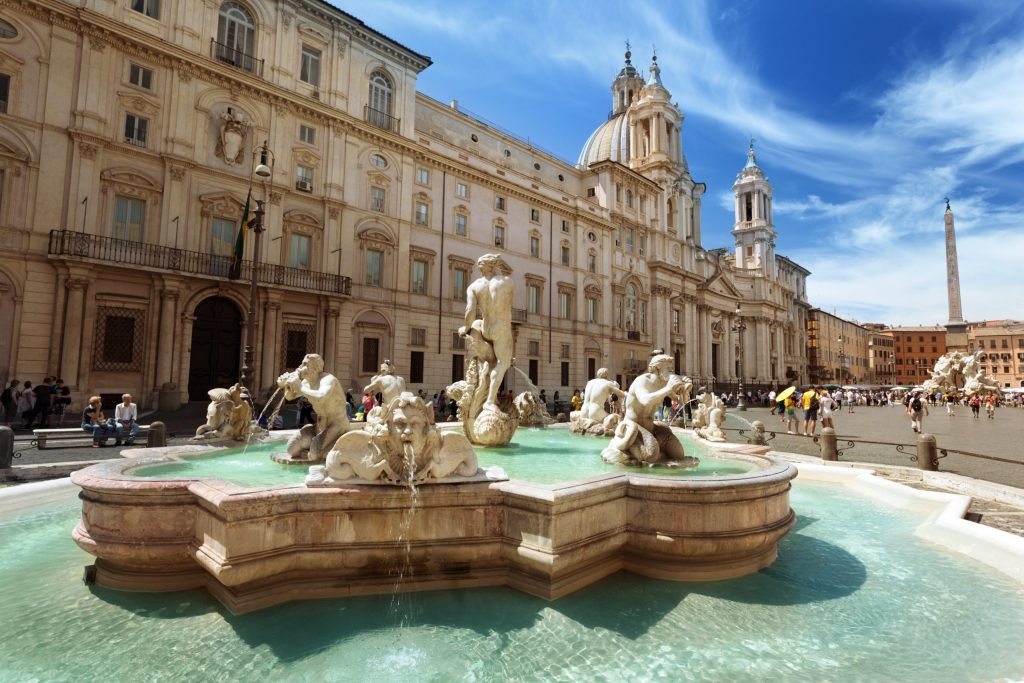
The historic centre is the most recognizable part of Rome and remains the reference point for international buyers seeking prestige. Areas around Piazza Navona, Campo de’ Fiori, the Pantheon, Trevi, Spanish Steps and surrounding streets offer a level of cultural density that few European capitals can match.
From a property perspective, this is where buyers find historic apartments, noble floors, period buildings, views, architectural details and assets with strong international appeal. The buy apartment Rome historic center price benchmark is significantly above the city average, with average values around €8,749/m² and prime assets often exceeding that level depending on building quality, floor, views, condition and outdoor space.
What defines the Centro Storico market:
- Historic and architecturally unique properties
- Strong international demand
- Limited supply of trophy assets
- High long-term value preservation
- Exceptional cultural and lifestyle appeal
The historic centre is best suited to buyers looking for a pied-à-terre, a prestigious second home, or a long-term store of value. It is less suitable for those seeking large internal spaces, easy parking, modern layouts or a quiet family routine. Streets can be busy, access can be restricted, and buildings may require careful technical and legal due diligence.
For lifestyle buyers, however, the Centro Storico offers something unique: immediate access to Rome’s cultural identity. For investors, its strength lies less in aggressive growth and more in scarcity, liquidity and international recognition.
Parioli and Pinciano: privacy, elegance and residential prestige
Parioli is often considered one of Rome’s most exclusive residential districts. It is not a tourist-facing area, and that is part of its appeal. The district is known for elegant buildings, quiet streets, embassies, private schools, green areas, and a discreet high-end residential atmosphere.
For international families and high-net-worth buyers, Parioli offers a different form of Roman luxury compared to the historic centre. The value here is not primarily about monuments outside the window, but about space, privacy, security, and everyday comfort.
Key characteristics of Parioli and Pinciano:
- Elegant residential buildings and villas
- Quiet and low-density environment
- Strong presence of embassies and international residents
- Proximity to Villa Borghese and green areas
- Larger apartments compared to the historic centre
Properties tend to be larger, buildings are often more practical, and the area feels more residential and controlled. Pinciano shares some of these characteristics, with a prestigious position near Villa Borghese and strong access to central Rome.
From an investment perspective, Parioli is not usually a high-yield play. It is better understood as a capital-preservation and lifestyle market, where demand is supported by wealthy local families, diplomats, executives and international buyers seeking residential prestige.
Prati: structure, services and everyday convenience
Prati is one of the most balanced choices for international buyers. Located near the Vatican and well connected to the city centre, it offers a more structured urban environment than many historic districts.
What makes Prati particularly attractive:
- Wide boulevards and organized urban layout
- Strong transport connections
- Excellent everyday services
- Residential atmosphere with central positioning
- High-end retail around Via Cola di Rienzo
This makes Prati particularly attractive for buyers who want to live in Rome rather than simply experience it occasionally. It has shops, restaurants, offices, healthcare services, schools, public transport and a more orderly street layout.
In pricing terms, Prati sits firmly in the upper segment but below the historic centre. Recent district data places Prati, Borgo, Mazzini and Delle Vittorie around €6,290/m², with a profile defined by stability, centrality and reliable demand.
For expats, professionals and long-term residents, Prati is often easier to manage than the historic centre. For investors, it offers a balanced profile: not the cheapest entry point, not the highest growth story, but a resilient district with strong liquidity and broad appeal.
Aventino and San Saba: quiet exclusivity in central Rome
Aventino and San Saba offer one of the most distinctive residential environments in Rome. They are central, historic, quiet and green, but feel far removed from the pressure of the tourist core.
The area is particularly appreciated for:
- Privacy and low traffic density
- Elegant residential atmosphere
- Green spaces and panoramic viewpoints
- Historic architecture and villa settings
- Strong perception of exclusivity
Aventino, located on one of Rome’s seven hills, is associated with villas, elegant apartment buildings, gardens, privacy and panoramic views. San Saba adds a more village-like residential character, with a calmer pace and strong architectural identity.
This area is particularly suitable for buyers who want central Rome without constant movement outside the door. It can work well for families, senior buyers, diplomats, lifestyle buyers and long-term holders. The main limitation is supply: properties are limited, and high-quality opportunities do not appear frequently.
From a market perspective, Aventino, San Saba and Caracalla sit among Rome’s most exclusive segments, with average values around €6,773/m² in recent data. The appeal is driven by scarcity and residential quality rather than volume.
Trastevere and Testaccio: identity, energy and flexible demand
Trastevere is one of the most internationally recognized neighbourhoods in Rome. It offers narrow streets, historic buildings, restaurants, nightlife, artisan identity and a strong sense of place.
The appeal of Trastevere and Testaccio includes:
- Strong Roman identity and atmosphere
- Vibrant food and cultural scene
- High international visibility
- Strong rental and resale demand
- More accessible pricing compared to trophy central assets
However, Trastevere is not for everyone. It can be lively, noisy and less practical than more residential districts. Buyers should carefully distinguish between charming streets with long-term residential appeal and overexposed areas affected by evening crowds or tourist concentration.
Testaccio offers a different but equally important identity. It is more local, historically working-class, food-oriented and increasingly appreciated by buyers who want authenticity without being fully inside the tourist centre.
Together, Trastevere and Testaccio represent a strong lifestyle segment, with prices around €6,560/m² according to recent district data. For investors, these districts can be attractive because demand is broad: lifestyle buyers, international visitors, students, professionals and long-term residents all recognize the area.
Investment opportunities
The right district can influence both lifestyle quality and long-term performance. Review investment opportunities across Rome’s most sought-after residential areas.
Monteverde and Gianicolense: space, greenery and family appeal
Monteverde is one of the most interesting districts for buyers who want a residential setting with better space and a stronger connection to greenery. Located near Villa Doria Pamphilj, one of the largest parks in Rome, it appeals to families, expats, remote workers and buyers who prioritize livability over prestige.
The district is particularly appreciated for:
- Access to green spaces and parks
- Larger apartments and better layouts
- More competitive prices per square meter
- Residential and quieter environment
- Strong suitability for long-term living
Monteverde Vecchio has more historic charm and proximity to central Rome, while Monteverde Nuovo and surrounding Gianicolense areas offer more modern residential stock and often better value per square meter.
Recent market data places Monteverde, Gianicolense, Colli Portuensi and Casaletto around €4,381/m², significantly below prime central districts. This gap is important. For the same budget, buyers may access larger apartments, better layouts, balconies, parking possibilities or buildings that are easier to manage.
For families asking about the safest area to stay in Rome Italy, Monteverde is often part of the conversation because of its quieter residential atmosphere and access to green space.
Bologna, Policlinico and Nomentano: accessibility and functional demand
The Bologna–Policlinico area offers a different kind of value. It is not luxury in the classic Roman sense, but it is practical, connected and supported by strong demand from students, professionals, medical workers and long-term residents.
Its strengths include:
- Excellent public transport access
- Strong rental demand
- Proximity to universities and hospitals
- Functional residential stock
- Good balance between centrality and pricing
The presence of universities, hospitals and transport connections creates a stable base of demand. This makes the area relevant for investors seeking rental resilience and for buyers who want access to central Rome without paying prime prices.
Recent data places Bologna and Policlinico around €5,537/m², with strong annual growth in recent market snapshots. That positions the area between prime residential districts and more accessible semi-central neighbourhoods.
For an international buyer, this district is not usually the first emotional choice. It is more rational than aspirational. But for investment logic, accessibility and structural demand, it deserves attention.
Ostiense and Garbatella: regeneration and urban character
Ostiense and Garbatella have become increasingly interesting for buyers looking at Rome’s growth potential. The area combines former industrial identity, creative spaces, university connections, restaurants, transport links and a younger urban demographic.
Why investors increasingly monitor these districts:
- Urban regeneration and gentrification
- Growing popularity among young professionals
- Strong medium-term appreciation potential
- Better entry prices than prime districts
- Expanding creative and cultural scene
Garbatella has a distinctive architectural identity and a strong local character. Ostiense has more urban momentum, with links to business, education and cultural spaces.
For investors, these areas can support medium-term growth strategies; for lifestyle buyers, they offer a less polished but more dynamic version of Rome. The key is micro-location. Some streets offer strong upside and good access; others may still feel transitional. A buyer should not approach Ostiense or Garbatella as uniform markets.
Flaminio: culture, design and long-term positioning
Flaminio has become increasingly relevant for buyers interested in culture, design and long-term positioning. Its appeal is supported by institutions such as MAXXI, Auditorium Parco della Musica and proximity to Villa Borghese and Parioli.
The district stands out for:
- Strong cultural and architectural identity
- Contemporary lifestyle appeal
- Proximity to green areas and northern Rome
- Balanced mix of prestige and livability
- Long-term residential positioning
For buyers who find Parioli too traditional and the historic centre too intense, Flaminio can represent a sophisticated alternative. It has cultural infrastructure, residential quality and better access to northern Rome. It also attracts buyers who value architecture, art and a more contemporary lifestyle.
From a property perspective, Flaminio can offer a mix of elegant apartments and more practical urban stock. It is not cheap, but it sits within a broader high-end residential logic alongside Parioli.
Which Rome area fits which buyer?
The best way to choose in Rome is to match the neighbourhood to the buyer profile.
| Buyer profile | Best-fit areas | Why |
| Lifestyle buyer | Centro Storico, Trastevere, Monti, Aventino | Historic identity, cultural access, strong emotional appeal |
| Family buyer | Parioli, Monteverde, Aventino, Prati | Safety perception, services, space, quieter residential setting |
| Expat buyer | Prati, Monteverde, Trastevere, Testaccio, Parioli | International familiarity, services, community, livability |
| Investor | Bologna, Ostiense, Garbatella, Pigneto, Testaccio | Demand depth, growth potential, rental or resale flexibility |
| Luxury buyer | Centro Storico, Parioli, Aventino, Prati, Flaminio | Scarcity, prestige, high-quality residential stock |
This framework is more useful than a single ranking. Rome does not reward generic choices. It rewards precision.
Final considerations
The best areas to live in Rome Italy depend on how the property will be used. For prestige and long-term capital preservation, the historic centre, Aventino, Parioli and Prati remain highly relevant. For lifestyle and character, Trastevere, Testaccio and Monti offer strong emotional appeal. For families, Monteverde, Parioli and Aventino provide a more residential rhythm. For investment, Bologna, Ostiense, Garbatella and selected emerging districts deserve closer analysis.
Rome is not a city where buyers should choose only by reputation. The right decision comes from understanding the interaction between area, property type, lifestyle, cost, liquidity and future demand.
For international buyers, this is where local guidance becomes essential. A property may look attractive online, but the real value is often determined by micro-location, building quality, documentation, access, long-term usability and resale potential.
Looking to buy property in Rome or elsewhere in Italy?
At Italian Real Estate Company, we assist international clients in buying property in Rome and throughout Italy, taking care of every step of the process to ensure a smooth and stress-free experience.
From area selection and property search to due diligence, negotiations, legal coordination, technical checks and final acquisition, we manage the process on your behalf so you do not have to navigate the complexity of the Italian real estate system alone.
Related articles
-
 Investment tips Observatory
Italy Real Estate News Today: Offer and Demand Gap and Opportunities in 2026
8 January 2026
-
 Investment tips
Sammezzano Castle in Italy: An Orientalist Masterpiece in Tuscany Seeks a New Owner
23 August 2024
-
 Investment tips Observatory
Rental Investment Strategies in Rome: Short-Term vs. Medium-Term Returns
15 July 2026

